Everywhere I look at the moment, someone is selling me my own childhood back at a premium.
Bone broth in chic little pouches. Fermented vegetables in jars with minimalist labels. Sourdough with a backstory longer than mine. “Thirty plants a week” trending like it’s a new invention and not just… how my Nonna did the shopping.
And listen – I’m delighted. Truly. As someone who now works in nutrition, I am thrilled that gut health has finally had its moment. I just can’t help laughing, because the wellness industry has spent the last decade rediscovering, rebranding and re-selling what was bubbling away on my family’s stove every single week of my childhood. For free. In a pot older than me.
The Original Gut Health Protocol
Let me describe the scene. A Sunday. My mum’s kitchen. On the hob: a pot of beans that had been soaking since approximately the dawn of time. Next to it, a broth made from a chicken carcass that had already fed us once and was now, in its second act, becoming medicine.
In the fridge: leftovers being reinvented, vegetables in various states of being “used up,” and something pickled that nobody could remember starting.
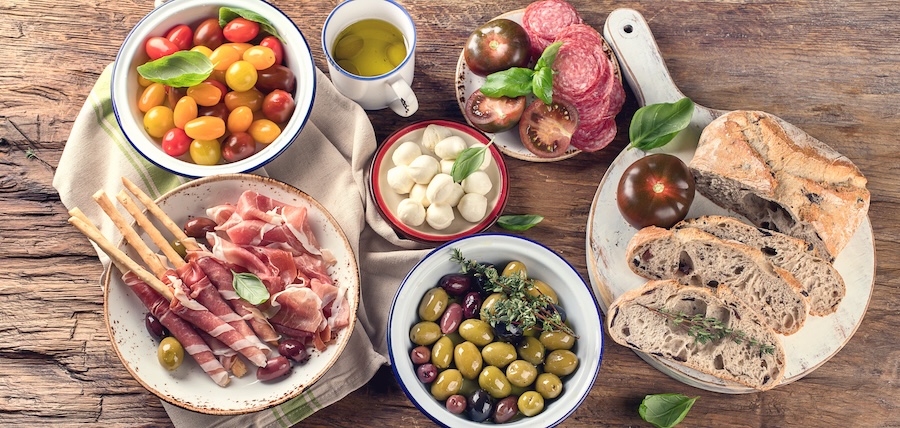
On the table, always: bread with actual structure, olive oil, and whatever was growing, cheap or in season — which meant we ate differently in October than we did in June, without anyone calling it “seasonal eating” or charging us extra for it.
Beans, lentils, greens, garlic, tomatoes, herbs, olive oil, fish on Fridays, fruit for pudding and a slightly alarming array of vegetables cooked until they surrendered. Fibre, ferments, polyphenols, plant diversity — the whole modern gut health checklist, achieved accidentally, weekly, by a woman who would have looked at the word “microbiome” and asked if it needed more salt.
Cucina Povera: Fancy Words for Not Wasting Anything
There’s a name for the way my family cooked — cucina povera, “poor cooking.” Peasant food. The cooking of people who couldn’t afford to waste a carrot top, let alone a carcass.
Nothing was binned. Bones became broth. Stale bread became panzanella, or breadcrumbs, or that soup that is essentially bread having a spa day in tomatoes. Parmesan rinds went into the minestrone like little flavour grenades. The odds and ends of vegetables — the leaves, the stalks, the bits modern recipes tell you to discard — were exactly the bits that went in the pot.
And here’s the joke of it: those unfashionable bits, the peels and stalks and leaves and bones, are where so much of the fibre and nutrition actually lives. My family wasn’t being virtuous. They were being skint. It just happens that skint and gut-healthy have an enormous overlap.
What This Looks Like on a Wet Tuesday in Britain
Now — before anyone panics — I am not suggesting you start simmering carcasses at 6am or fermenting things in your airing cupboard. You have a life. Possibly children. Possibly children who are IN a beige food phase (a story for another day).
But the Nonna principles translate beautifully to a normal, busy, British week:
Tins are your friend. Tinned beans, tinned lentils, tinned tomatoes — cucina povera would have LOVED a tin of butter beans for 60p. There is no prize for soaking.
One pot, many plants. A minestrone, a stew, a soup — chuck in every sad vegetable in the drawer. Variety matters more than perfection, and the soup does not judge.
Keep the rind, keep the carcass, keep the stalks. Broccoli stalks grate into anything. A chicken carcass and thirty lazy minutes make a broth that costs nothing.
Eat together when you can. Because — and this is the bit the supplement companies can’t bottle — how we eat matters too. Slowly, together, talking too loudly. My Nonna never once ate standing over the sink, and frankly she’d have strong words for how often I do.
The Moral of the Minestrone
My Nonna never read a study in her life. She couldn’t have told you what fibre does or named a single strain of gut bacteria. But she fed her family in a way that science is now spending millions confirming was right all along: mostly plants, lots of variety, nothing wasted, everything shared.
So by all means enjoy the fancy broth pouches — no judgment here, I’ve bought them too. But know that you don’t need a subscription to eat this way. You need a big pot, some tins, whatever vegetables are looking guilty in your fridge, and — ideally — people to eat it with.
The microbiome is new. The minestrone is not. Trust the minestrone.
Leave a Reply